Children with Cancer UK joins charities around the world for Childhood Cancer Awareness Month
This September, Children with Cancer UK is joining charities around the world in supporting Childhood Cancer Awareness Month
1st September 2022

Childhood Cancer Awareness Month is an internationally recognised awareness month, which takes place during September every year. Symbolised by the colour gold and a gold ribbon, it’s a chance for cancer charities, their supporters and those with personal connections to childhood cancer to raise awareness of all the issues around childhood cancer.
‘When I Grow Up…’
This year, Children with Cancer UK has chosen the theme of ‘When I grow up’. Dreaming of who we want to be when we grow up is a magical part of every childhood. But for many children and young people who survive a childhood cancer diagnosis, life doesn’t always return to normal when treatment ends. Lifelong side effects from toxic treatments such as mobility issues, loss of sight or hearing, cognitive impairments and infertility mean that life after treatment is unrecognisable to life prior to diagnosis, and the course of growing up can be changed forever.
This Childhood Cancer Awareness Month, Children with Cancer UK continues to take steps towards a world in which every child gets to grow up and fulfil their dreams. As well as raising awareness of childhood cancer through stories told by children and their families, the charity is also shining a spotlight on the pioneering research it is funding to find cures and develop kinder, safer and more effective treatments.
Jo Elvin, CEO, Children with Cancer UK said;
Childhood Cancer Awareness Month is very special to us at Children with Cancer UK. We’re driven by making sure cancer doesn’t stand in the way of a child or young person’s hopes for the future, and proud to be one of the leading children’s cancer charities for the funding of research into children and young people’s cancer.
We’re excited to join with others around the world to shine a light on some incredible stories and the work that still needs to be done to ensure that children not only survive cancer, but thrive post treatment.
Meet Eve and Josh
For this Childhood Cancer Awareness Month, Children with Cancer UK asked budding nature photographer Josh, 11 and aspiring dancer Eve, 13 to join them for a day to explore their aspirations for when they grow up. The children, who’d both been given a cancer diagnosis at a young age, were paired with professionals who specialise in the areas they love. Their eternal optimism and zest for life shone through despite the challenges of growing up with cancer and they even shared some messages of encouragement for others who may be suffering.
Eve’s Story
Eve was diagnosed with craniopharyngioma, a type of brain tumour in 2019, at the age of 10. After suffering from severe headaches, blurry vision, tiredness and nausea for months, she was as relieved as she was scared when she received the diagnosis. Soon after, she underwent brain surgery to save her vision and drain the fluid from the symptom-causing cyst which had grown on the tumour. While the tumour cannot be removed, she has since undergone proton therapy to manage other cysts.
Despite having to make regular visits to the hospital and have MRI scans to monitor the tumour, Eve is doing amazingly well, she loves to dance, as it helps her forget about any struggles. Children with Cancer invited her for a day of dance, where she met charity ambassador Dame Arlene Phillips, and visited the legendary Sadler’s Wells theatre.
I have recently become an ambassador for Children with Cancer UK, and when I heard that there was a girl called Eve who wanted to be a dancer, I knew I had to meet her.” Said Dame Arlene Philips, Ambassador for Children with Cancer UK. “I was hugely inspired by her story, and her powerful message to other children going through a cancer diagnosis to stay strong.
Josh’s Story
Josh was diagnosed with Burkitts Lymphoma, a very aggressive cancer, at the age of three in April 2014. He spent four months in hospital enduring gruelling chemotherapy which left him unable to eat, talk or move during much of his treatment. To help him through his chemotherapy, he was hooked up to anti-sickness, high dose IV morphine, high dose IV paracetamol and IV antibiotics. The treatment, and the worry of relapse had a huge impact on Josh and his family.
Now 8 years in remission, Josh has a love of nature, drawn by its tranquillity and the freedom he gets from being outdoors. His biggest dream is to become a photographer who works for a good cause. Children with Cancer UK introduced him to Zoologist and Nature Filmmaker, Deya Swift, for a day in the Peak District, exploring the wildlife and nature filmmaking techniques.
My favourite part of the day was looking at all the wildlife – and there were so many things I learned.” Josh remarked about the day. “Children with Cancer UK has helped by supporting me and my family and giving us hope after my diagnosis.
Children with Cancer UK will be asking supporters to watch, share and like Eve and Josh’s stories throughout the month of September to help raise awareness and ensure children like them can grow up with the best chance of fulfilling their dreams.
You can find the films on our Childhood Cancer Awareness Month page.
Other stories
We have lots of information to help you learn more about childhood cancer. From specific cancer types, to treatments and causes.
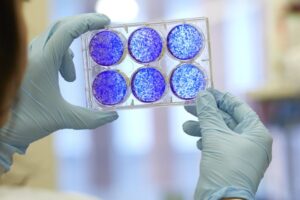
Children with Cancer UK-funded research reaches major fertility milestone
Researchers at the University of Edinburgh have carried out the UK’s first frozen testicular tissue transplant, marking a major milestone in fertility preservation research supported by Children with Cancer UK for over a decade. The pioneering procedure could offer new hope for boys whose future fertility may be affected by cancer treatment.
Read more Children with Cancer UK-funded research reaches major fertility milestone
Fundraiser of the Month: Shyanne
Fundraiser of the Month: Shyanne Our Fundraiser of the Month for July 2026 goes to the incredible Shyanne, who has…
Read more Fundraiser of the Month: Shyanne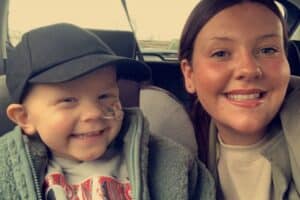
A week before Daniel’s 3rd birthday, they found a tumour
Daniel was diagnosed with Burkitt’s lymphoma – and a tumour in his stomach area, a week before his 3rd birthday.
Read more A week before Daniel’s 3rd birthday, they found a tumour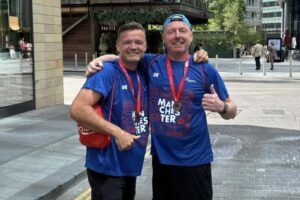
Fundraiser of the Month: Steve and Chris
Fundraiser of the Month: Steve and Chris Our Fundraiser of the Month for June 2026 goes to the incredible Steve…
Read more Fundraiser of the Month: Steve and Chris
Too Big Campaign – Press Release
‘2 BIG’: OVERSIZED EVERTON KIT HIGHLIGHTS HARSH REALITY OF CHILDREN RECEIVING ADULT CANCER TREATMENT 11-year-old Kaiden Edwards, who is living…
Read more Too Big Campaign – Press Release
Fundraiser of the Month: Izzy
Fundraiser of the Month: Izzy Our Fundraiser of the Month for April 2026 goes to the amazing Izzy, who set…
Read more Fundraiser of the Month: Izzy
Teenage and Young Adult Cancer Awareness Month 2026
Childhood cancer survivor shares his story for Teenage and Young Adult Cancer Awareness Month after completing a marathon and inspiring others to follow.
Read more Teenage and Young Adult Cancer Awareness Month 2026
Alfie’s Glioblastoma Story
Alfie’s Glioblastoma Story Alfie was only 3 months old when his dad noticed something wasn’t right. Read his full story…
Read more Alfie’s Glioblastoma Story
Teddy’s Leukaemia Story
Teddy’s Leukaemia Story Teddy was only 3 when he was diagnosed with Leukaemia. His father, Sam is sharing Teddy’s story…
Read more Teddy’s Leukaemia Story
2026 Research Grant Call launched
Children with Cancer UK launches the 2026 Research Grant Call to accelerate breakthroughs in childhood cancer
Read more 2026 Research Grant Call launched