Teenage and Young Adult Cancer Awareness Month: Elevating Teenage Voices
Throughout April, we’ll be sharing stories from young people about the impact of cancer on fertility, body image, mental health and education, to amplify their voices and raise awareness of their experiences.
What is Teenage and Young Adult Cancer Awareness Month?
April marks Teenage and Young Adult Cancer Awareness Month (TYACAM), a month to spotlight the unique challenges faced by teenagers and young adults navigating a cancer diagnosis during some of the most formative years of their lives.
Children with Cancer UK is teaming up with other charities supporting teenagers and young people with cancer across the UK for this April.
The facts:
- In the UK, around 2,300 young people (aged 15 to 24 years) are diagnosed with cancer each year. Adolescence is already a period of identity-building, independence and transition. A cancer diagnosis adds a complex layer of emotional, physical and social impact that is often underrepresented in mainstream cancer conversations.
- There are over 4,000 children and young people diagnosed with cancer each year in the UK.
- Around two thirds (63%) of cancer in teenagers and young people is found in 20-24 year olds.
- The most common cancers in teenagers and young adults are melanoma (skin cancer) and carcinomas; around 30 out of 100 young people are diagnosed with these types of cancer.
- The second most common cancer type is lymphoma, accounting for around 20% of cancers in young people.
Learn more about teenage and young adult cancer here.
Cancer, relationships and mental health
A cancer diagnosis doesn’t just affect the person diagnosed. It can have a massive impact on family, friends and partners too. Navigating your relationships with the people around you, as well as creating new ones, can be very challenging when you’re young.
I was off school between the ages of like 12 to 16. I wasn’t seeing my peers. I felt really isolated and lonely.
– Ellen, diagnosed with acute promyelocytic leukaemia at 9 years old
Cancer and education

Cancer treatments and their side effects can massively disrupt a young person’s education, changing what their options for further study and careers are.
I had some homeschooling but I remember at the time I just didn’t really feel well for homeschooling. It wasn’t regular and therefore my education was just massively disrupted.
Due to my late effects and the stroke I’ve had, I really found it difficult in exams to retain the information. I got three GCSEs over the space of two years.
– Ellen, diagnosed with acute promyelocytic leukaemia at 9 years old.
Due to the large weight gain and lazy eye that I developed; during school, I was often bullied. Overall, the cancer diagnosis itself didn’t affect my experiences at school too much, but more the side effects of the treatment.
– Andrew, diagnosed with acute lymphoblastic leukaemia just before his 3rd birthday
Cancer and body image
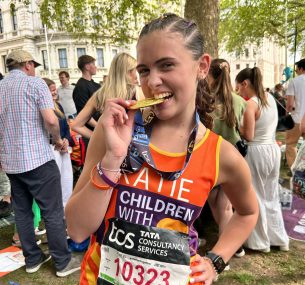
Cancer treatment can cause multiple side effects, like hair loss, weight gain or loss, and scarring. Young people can face anxieties about how their body looks at a time when they’re still figuring out who they are and how they want others to see them.
The treatment that saved my life also changed how I looked. I lost my hair, I looked and felt so weak, and there were scars left behind from everything my body had to go through.
I just remember the feeling of ‘Why do I look so different?’
– Katie, diagnosed with acute lymphoblastic leukaemia at 3 years old.
Cancer and fertility
Some cancer treatments can affect fertility, and for teenagers and young people who are diagnosed, it may be the first time they’ve had to think about whether they want children of their own.
My ovaries, bowel and bladder were hit with radiation so doctors told me it was probably not possible to carry a baby full term. I was devastated and absolutely heartbroken. – Leah
Leah was told that, due to the radiation therapy she received for her cancer, she may not be able to have children. She was diagnosed with tailbone cancer at just 13 and underwent intensive treatment that saved her life, but left her with lasting late effects.
In 2026, we revisited Leah to meet Aria, her one year old daughter.
👉 How you can get involved this month
Donate today to help teens and young adults like Ellen, Katie, Andrew and Leah, who are facing cancer and treatment side effects.

Search #TYACAM to follow along and find out how charities are raising awareness and how you can get involved this April.
Follow our social channels below to learn more about TYACAM, including common cancer symptoms and stories from young patients.