
Research
Transplantation of Cryopreserved Testicular Tissue to Restore Fertility after childhood cancer
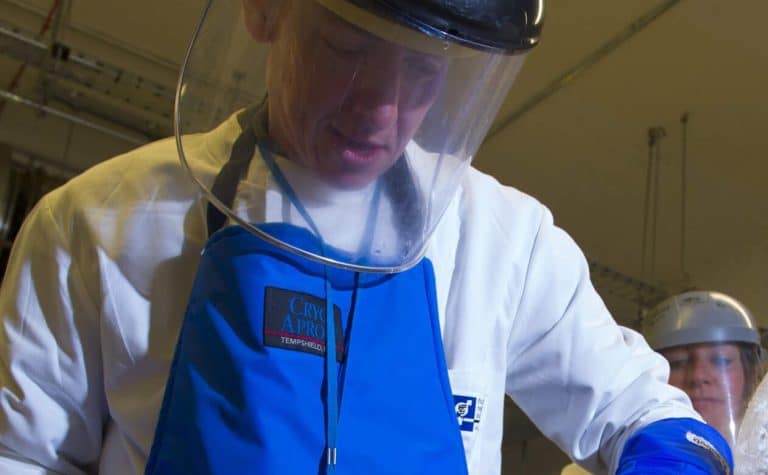
Childhood cancer rates have increased over recent decades and remarkable improvements in cure rate has resulted in an increase in young adults experiencing subsequent health effects of their cancer treatment. This project will, for the first time, prove that fertility potential can be restored in patients who would otherwise be unable to have their own biological children.
Project Details
- Transplantation of Cryopreserved Testicular Tissue to restore fertility after childhood cancer
- Lead Researcher
- Professor Rod Mitchell
- Research Centre
- University of Edinburgh
- City & Institution Postcode
- Edinburgh, EH16 4TJ
- Start Date
- 1 June 2023
- Project Duration
- 36 months
- Grant Amount
- £290,454.69
Overview

Childhood cancer rates have increased over recent decades and remarkable improvements in cure rate has resulted in an increase in young adults experiencing subsequent health effects of their cancer treatment. Ensuring long-term health of this new and expanding patient cohort is one of the most pressing areas of clinical need in paediatric oncology. Infertility occurs in the majority of males receiving high-dose chemotherapy with drugs known as alkylating agents, which are commonly used in childhood cancer. Unlike the situation in men, cryopreservation of sperm is not an option to preserve fertility in these boys as their testicles are not capable of making sperm in childhood. As a result, there is currently no established clinical option to prevent infertility in prepubertal boys receiving chemotherapy. Preservation of fertility in children receiving cancer treatment is dependent on survival of the spermatogonial stem cells (SSC) in the testicle. These stem cells will generate sperm in males after puberty. We are currently able to cryopreserve testicular tissue, containing SSCs, from boys before they receive cancer treatment. Establishing this fertility preservation programme was supported by funding from Children with Cancer UK. This tissue is available for future use to restore fertility in these patients in adulthood. Transplantation of the tissue back to the patient represents a good potential option to restore fertility in these patients and this has proved to be successful in primate studies. However, transplantation has not been performed in humans yet.
Professor Rod Mitchell and his team aim to restore fertility in male patients who have had childhood cancer treatment that has made them infertile. The aim of this project is to undertake the first clinical trial to transplant testicular tissue to restore fertility in patients who had their tissue cryopreserved in childhood. The project will involve developing a safe and effective protocol to conduct the transplants, in addition to obtaining the necessary ethics and regulatory approvals. The project will undertake the transplants in carefully selected cases. Once the transplanted tissue has begun to produce sperm, these will be extracted and stored or used to make embryos if the patient wants to have a child at the time. This would represent an important breakthrough to enable young people treated for cancer during childhood to have children of their own.
What difference will this project make?

This project will, for the first time, prove that fertility potential can be restored in patients who would otherwise be unable to have their own biological children. Successful completion of the project will potentially open the door to future fertility for greater than 800 patients in the UK (greater than 2500 worldwide) who have had testicular tissue stored for fertility preservation, as well as providing an option for all future patients due to receive childhood cancer treatment that can impair their fertility. This would represent a major step for improving the quality of life for survivors of childhood cancer.
Groundbreaking fertility procedure offers new hope for childhood cancer survivors
We’re delighted to share an exciting update from the fertility preservation research programme supported by Children with Cancer UK.
Researchers in Edinburgh have successfully carried out the UK’s first transplant of frozen testicular tissue, a significant milestone in efforts to preserve fertility for boys who may be affected by cancer treatment. The procedure was performed on a 19-year-old patient whose tissue had been frozen before undergoing chemotherapy and a bone marrow transplant.
This pioneering procedure is only the second reported transplant of its kind worldwide and represents an important step forward in developing fertility preservation options for young patients who are not yet old enough to benefit from sperm freezing.
The achievement follows more than a decade of research led by the University of Edinburgh and NHS Lothian, with Children with Cancer UK proudly supporting the programme since 2015. Today, more than 1,200 patients across the UK have tissue stored through the programme for potential future use.
While researchers continue to monitor the outcome of the transplant, this landmark achievement brings renewed hope to boys facing fertility risks as a result of cancer treatment and highlights the life-changing impact of long-term investment in research.
A decade of research made possible by supporters
Children with Cancer UK has been proud to support this groundbreaking work since 2015, when funding helped establish the Edinburgh testicular tissue preservation programme. The charity provided additional funding in 2024 to support the transplantation study.
Today, the programme has expanded nationally, with more than 1,200 patients across the UK having tissue stored for potential future use.
Hope for future generations
The young man who underwent the procedure said it had given him “genuine hope for the future”.
He explained that he had long worried about the possibility of infertility and had begun to accept that having children of his own might not be possible. Although it is not yet known whether the transplant will successfully restore fertility, he said that having the opportunity to take part in the research means a great deal to him and could help other young people facing similar challenges.
Researchers will continue to monitor his progress over the coming months. Some of the transplanted tissue will be examined in 2027 to determine whether sperm production has begun.
Professor Rod Mitchell, who leads the study at the University of Edinburgh and NHS Lothian, described the procedure as an important step towards helping boys whose fertility may be affected by cancer treatment.
This is a big step towards helping boys facing treatments that damage their fertility to have children of their own. Ten years ago, we started our research programme to freeze and store pieces of testicle from boys before they start chemotherapy, to preserve their fertility. We are beginning to see some of these young men return to explore their fertility options. This study offers real hope for future fertility in boys facing cancer treatment.
Tracey Gillies, Medical Director at NHS Lothian, said
This landmark procedure is an important step forward for young people whose future fertility may be affected by the treatment they need to overcome serious illness. The collaboration between NHS clinicians and researchers at the University of Edinburgh highlights the strength of clinical research in Edinburgh and our shared commitment to improving outcomes for patients across Scotland. This is a significant piece of world-leading work, and we are grateful to the patient and his family for helping advance research that could transform care for others in the future
The UK-based patient, who wishes to remain anonymous, said
Fertility is something I’ve struggled with personally for a long time. I’ve always wanted to have children of my own but at some point, I found myself starting to slowly accept that that might never be possible for me. Having this procedure has given me genuine hope for the future. We don’t know yet whether it will work, but knowing that there is now even a possibility means more to me than I can really put into words. I’m incredibly grateful to everyone for giving me this opportunity and for all the work that has made it possible. I also hope that being part of this research means that, in the future, other young people in the same position can have that hope too
The Edinburgh testicular project was established with funding from Children with Cancer UK
About the Research Team
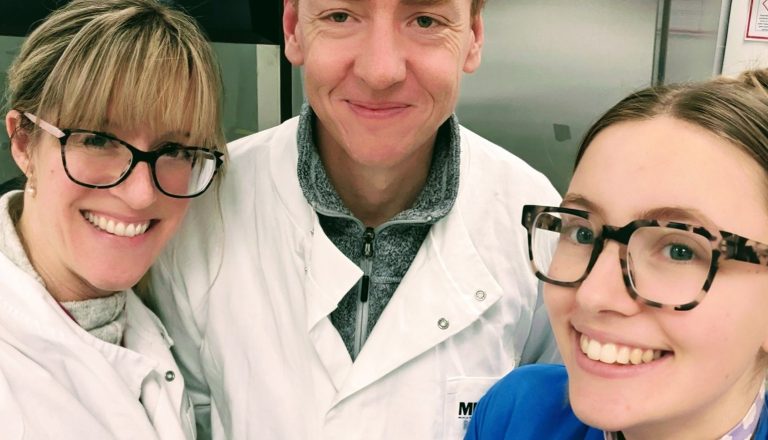
Professor Rod Mitchell is a Clinician Scientist and Paediatric Endocrinologist at the University of Edinburgh and one of the co-founders of the Edinburgh Fertility Preservation programme.
The clinical research team consists of the leading UK fertility preservation experts for children with cancer who are world-leaders in the field. The team includes doctors who provide fertility counselling for children with cancer and their families. They also support the collection of testicular tissue for storage prior to their treatment. Surgeons with expertise in testicular surgery and tissue transplantation are also part of the research team. Doctors and scientists with expertise in freezing human tissues for future clinical use are also involved in the project. Scientists with expertise in IVF will perform experiments to test the function of sperm obtained from the transplanted tissues. The team has all of the expertise necessary to conduct the first clinical trial of testicular transplantation to restore fertility in males who have received sterilising cancer treatment in childhood.
Other stories
We have lots of information to help you learn more about childhood cancer. From specific cancer types, to treatments and causes.
Understanding the control of a cancer causing protein in Desmoplastic Small Round Cell Tumour (DSRCT) to develop new targeted treatments.
We’re funding a research project focused on understanding the control of a cancer causing protein in Desmoplastic Small Round Cell Tumour (DSRCT) to develop new targeted treatments.
Read more Understanding the control of a cancer causing protein in Desmoplastic Small Round Cell Tumour (DSRCT) to develop new targeted treatments.
Advancing new therapies against germ cell tumours in children and young adults – decreasing side effects, overcoming resistance
The team’s proposal aims to advance a promising new therapeutic approach against germ cell tumours from the bench, towards the clinic and patient benefit.
Read more Advancing new therapies against germ cell tumours in children and young adults – decreasing side effects, overcoming resistance
Tracking the spread of metastatic medulloblastoma to identify key drivers of disease progression and therapeutic vulnerabilities
This research addresses a critical gap in our understanding of how medulloblastoma, a fast-growing and often aggressive brain cancer that primarily affects children, spreads to other parts of the brain and spine (a process called metastasis).
Read more Tracking the spread of metastatic medulloblastoma to identify key drivers of disease progression and therapeutic vulnerabilities
Making immunotherapy more powerful for high-risk acute leukaemia
Making immunotherapy more powerful for high-risk acute leukaemia Project Details Overview The most common cancer in children is a type…
Read more Making immunotherapy more powerful for high-risk acute leukaemia
Dissecting apart the biology of childhood lymphoma in Africa towards improving treatment outcome
Dissecting apart the biology of childhood lymphoma in Africa towards improving treatment outcome Project Details Overview We want to understand…
Read more Dissecting apart the biology of childhood lymphoma in Africa towards improving treatment outcome
Can targeting RNA help treat children with neuroblastoma?
Can targeting RNA help treat children with neuroblastoma? Project Details Overview Neuroblastoma is a childhood cancer that mainly affects babies and young…
Read more Can targeting RNA help treat children with neuroblastoma?
The BIOMECA2 Study: Linking tumour biology to better treatment in a study of an aggressive childhood brain tumour
The BIOMECA2 Study: Linking tumour biology to better treatment in a study of an aggressive childhood brain tumour Project Details…
Read more The BIOMECA2 Study: Linking tumour biology to better treatment in a study of an aggressive childhood brain tumour
Looking for early signs on brain MRIs that can predict whether young people with ependymoma will go on to experience cognitive problems
Looking for early signs on brain MRIs that can predict whether young people with ependymoma will go on to experience…
Read more Looking for early signs on brain MRIs that can predict whether young people with ependymoma will go on to experience cognitive problems
Developing immunotherapy for childhood sarcomas.
Research Developing immunotherapy for childhood sarcomas. Some childhood cancers don’t respond well to chemotherapy, but there is hope in the…
Read more Developing immunotherapy for childhood sarcomas.
Childhood cancer immunotherapy using blood cells from umbilical cord blood.
Research Childhood cancer immunotherapy using blood cells from umbilical cord blood. Immunotherapy is an important new approach in the treatment…
Read more Childhood cancer immunotherapy using blood cells from umbilical cord blood.