Ren’s Neuroblastoma Story
Ren was diagnosed with Neuroblastoma at just eight months old. His mum Harriot is sharing his story.

Re-assurance
My son Ren was diagnosed with Neuroblastoma at just eight months old. He will be two in April, and I often wish I could go back and hug the version of myself who was living through those early days — to show her a snapshot of the gorgeous, happy, healthy little boy he is now.
If you are reading this while scrolling for reassurance during your darkest time, I understand that primal fear. Hearing that your baby has cancer is utterly devastating. If sharing our story gives even a glimmer of hope to another family, then it is worth it.


Happy little boy
Ren is our first child. He was such a happy baby. The only real symptom was that he was frequently sick, which we were told was reflux. When we started weaning at six months, we hoped that might help. Instead, he developed constipation. Again, we were reassured it was normal — he was gaining weight and otherwise happy. We were prescribed baby Gaviscon and Lactulose.
The diagnosis
It wasn’t until we were away on holiday and Ren developed pneumonia that things changed. A paediatric consultant examined him and said he could feel something in his abdomen that shouldn’t be there. That comment set everything in motion. We managed to get an urgent referral to a surgeon. Initially, there was discussion of a possible milk protein allergy. But when Ren went in for a procedure, they discovered a tumour.
The next day he had scans and a few days later a Hickman line fitted. We were told immediately that it was very likely cancer.
The devastation is impossible to describe. You never think this will happen to your child.
This was just before Christmas. Between Christmas and New Year, we had our first emergency admission with a temperature — something all oncology parents come to know too well. The “pack up and go” bag becomes part of your life overnight. While we were in hospital, we received confirmation: it was neuroblastoma.
Treatment plans
Strangely, I didn’t cry at that moment. I had already spent days and nights in tears, frozen in terror at what might unfold. At that point, we just needed to know the stage. Anyone who has faced neuroblastoma knows how critical staging is. Survival rates vary significantly depending on risk group and stage, and the uncertainty is agonising. One small mercy was Ren’s age — being under 18 months gave him more favourable prognostic indicators.
Children are extraordinarily resilient
Thankfully, Ren was classified as Stage L2. He had one tumour on his adrenal gland. There was no MYCN amplification, which was positive news. However, due to the tumour’s size and its involvement with major blood vessels, immediate surgery was considered too risky. The plan was chemotherapy first, followed by surgery once the tumour had shrunk.
Chemotherapy is brutal. There is no way to soften that truth. But children are extraordinarily resilient. They can become very unwell quickly — and then bounce back just as fast. One of our wonderful nurses told us to focus on the good days and truly enjoy them. We took that advice to heart.
Life became strangely similar to lockdown. We limited our circle completely. No coughs, no colds, no risks. We spent as much time outdoors as we could. In the middle of the hardest period of our lives, we still created beautiful memories. It’s strange how the best and worst moments can run in parallel.
My partner and I were fortunate to both be off work, which meant we faced everything together. We became an even tighter unit — navigating long hospital days, emergency admissions, and sleepless nights side by side.
Ren completed six cycles of chemotherapy over six months. A few months later, once he had recovered sufficiently, he underwent major surgery. Mr Patel — an extraordinary surgeon and an even kinder human being — successfully removed over 95% of the tumour. Follow-up scans showed that the small remaining portion had completely calcified as a result of the chemotherapy.

Life now
Ren is now six months in remission.
Looking at him today, you would never know what he has endured. His beautiful blonde curls have grown back. He runs everywhere. He laughs constantly. Now that his line has been removed, he absolutely loves bath time and swimming. There are some side effects from treatment that we continue to manage, but we will get there — with time and patience.
The comeback has been nothing short of incredible.
Childhood cancer changes you forever. It brings fear unlike anything you have ever known. But it also brings perspective, strength, and a community of extraordinary professionals who dedicate their lives to saving children like Ren.
We will never stop being grateful for the care that made our son’s recovery possible — and we will never stop hoping that continued awareness and fundraising will ensure more families can tell stories like ours.
Harriot, March 2026

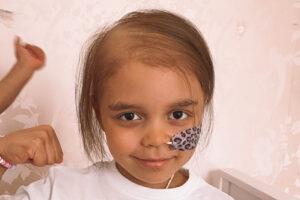
Arianna’s Neuroblastoma Story
Arianna’s neuroblastoma story “How can we be in 2026 and the cancer treatment that our kids are going through is…
Read more Arianna’s Neuroblastoma Story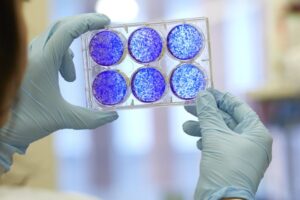
Children with Cancer UK-funded research reaches major fertility milestone
Researchers at the University of Edinburgh have carried out the UK’s first frozen testicular tissue transplant, marking a major milestone in fertility preservation research supported by Children with Cancer UK for over a decade. The pioneering procedure could offer new hope for boys whose future fertility may be affected by cancer treatment.
Read more Children with Cancer UK-funded research reaches major fertility milestone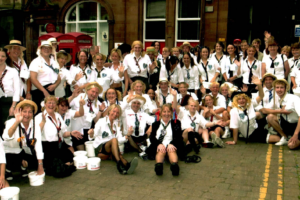
Fundraiser of the Month: Shyanne
Fundraiser of the Month: Shyanne Our Fundraiser of the Month for July 2026 goes to the incredible Shyanne, who has…
Read more Fundraiser of the Month: Shyanne
A week before Daniel’s 3rd birthday, they found a tumour
Daniel was diagnosed with Burkitt’s lymphoma – and a tumour in his stomach area, a week before his 3rd birthday.
Read more A week before Daniel’s 3rd birthday, they found a tumour
Fundraiser of the Month: Steve and Chris
Fundraiser of the Month: Steve and Chris Our Fundraiser of the Month for June 2026 goes to the incredible Steve…
Read more Fundraiser of the Month: Steve and Chris
Fundraiser of the Month: Izzy
Fundraiser of the Month: Izzy Our Fundraiser of the Month for April 2026 goes to the amazing Izzy, who set…
Read more Fundraiser of the Month: Izzy
Teenage and Young Adult Cancer Awareness Month 2026
Childhood cancer survivor shares his story for Teenage and Young Adult Cancer Awareness Month after completing a marathon and inspiring others to follow.
Read more Teenage and Young Adult Cancer Awareness Month 2026
Alfie’s Glioblastoma Story
Alfie’s Glioblastoma Story Alfie was only 3 months old when his dad noticed something wasn’t right. Read his full story…
Read more Alfie’s Glioblastoma Story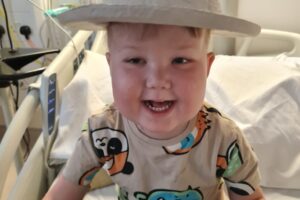
Teddy’s Leukaemia Story
Teddy’s Leukaemia Story Teddy was only 3 when he was diagnosed with Leukaemia. His father, Sam is sharing Teddy’s story…
Read more Teddy’s Leukaemia Story
2026 Research Grant Call launched
Children with Cancer UK launches the 2026 Research Grant Call to accelerate breakthroughs in childhood cancer
Read more 2026 Research Grant Call launched