Blocking the activity of an essential protein to treat T-cell acute lymphoblastic leukaemia
Dr Maarten Hoogenkamp will continue his work into blocking the EAAT1 protein, which is crucial for the growth of T-cell acute lymphoblastic leukaemia.

Project Details
- Development and in vivo evaluation of novel EAAT1 inhibitors for their capacity to suppress T-cell acute lymphoblastic leukaemia
- Lead Researcher
- Dr Maarten Hoogenkamp
- Research Centre
- University of Birmingham
- City & Institution Postcode
- Birmingham, B15 2TT
- Start Date
01/12/2025
- Project Duration
- 24 months
- Grant Amount
- £207,668.91
Overview
T-cell acute lymphoblastic leukaemia (T-ALL) affects around 200 people per year in the UK, with the vast majority being children and young adults. Treatment includes steroids and chemotherapy, sometimes followed by a stem cell transplantation. These treatments are so toxic that some patients can’t tolerate them, and can result in serious long-term side effects.
They also don’t work for one in five children and around 50% of adult patients – and the cancer can come back after initially successful treatment. When this happens, treatment options are extremely limited. Young people desperately need new medicines that are more effective and less toxic.
About the project
Dr Maarten Hoogenkamp’s team at the University of Birmingham have shown that a protein, called EAAT1, is essential to the growth of T-ALL cells. They have developed inhibitors that can ‘switch off’ the protein in the lab, but they need refining before they can be tested further.
In this project, the researchers will be addressing a key issue in their early inhibitors – that they are not able to persist inside the body. They will refine the inhibitor to make it more stable in the body, so it can’t be broken down as quickly.
Their new, more stable EAAT1 inhibitors will then be tested on mice with T-ALL to confirm their stability and ability to slow or eliminate the cancer. This is a crucial step that can show the safety and efficacy needed to eventually move the inhibitors forward to clinical trials.
Dr Vesna Stanulovic will be performing the laboratory work as the senior postdoc on the project.
What difference will this project make?
If inhibition of the protein EAAT1 works as efficiently in patients as in the laboratory, then these inhibitors are an exciting potential treatment for hard-to-treat T-ALL. This could reduce the use of the drugs that cause severe side effects, improving quality of life for patients.
The researchers have also found EAAT1 reliance in other cancers, particularly neuroblastoma and bladder cancer, so Dr Hoogenkamp hopes their inhibitors could help patients with a range of cancers.
Other stories
We have lots of information to help you learn more about childhood cancer. From specific cancer types, to treatments and causes.

Development of natural killer cell immunotherapy for paediatric rhabdomyosarcoma
Development of natural killer cell immunotherapy for paediatric rhabdomyosarcoma Dr Matthew Blunt aims to create and test immunotherapy treatments for…
Read more Development of natural killer cell immunotherapy for paediatric rhabdomyosarcoma
Developing immunotherapy for childhood sarcomas.
Research Developing immunotherapy for childhood sarcomas. Some childhood cancers don’t respond well to chemotherapy, but there is hope in the…
Read more Developing immunotherapy for childhood sarcomas.
Childhood cancer immunotherapy using blood cells from umbilical cord blood.
Research Childhood cancer immunotherapy using blood cells from umbilical cord blood. Immunotherapy is an important new approach in the treatment…
Read more Childhood cancer immunotherapy using blood cells from umbilical cord blood.
Focusing on immunotherapy to target cancer cells without damaging healthy cells
Research Focusing on immunotherapy to target cancer cells without damaging healthy cells Developing new treatments for childhood cancers can be…
Read more Focusing on immunotherapy to target cancer cells without damaging healthy cells
Focusing on immunotherapy to target cancer cells without damaging healthy cells
Research Focusing on immunotherapy to target cancer cells without damaging healthy cells Developing new treatments for childhood cancers can be…
Read more Focusing on immunotherapy to target cancer cells without damaging healthy cells
Childhood cancer immunotherapy using blood cells from umbilical cord blood
Research Childhood cancer immunotherapy using blood cells from umbilical cord blood Immunotherapy is an important new approach in the treatment of…
Read more Childhood cancer immunotherapy using blood cells from umbilical cord blood
Immunotherapy for infant and childhood MLL-rearranged acute lymphoblastic leukaemia
Research Immunotherapy for infant and childhood MLL-rearranged acute lymphoblastic leukaemia Young children with mixed lineage leukaemia rearranged infant acute lymphoblastic…
Read more Immunotherapy for infant and childhood MLL-rearranged acute lymphoblastic leukaemia
Immunotherapy for relapsed paediatric acute lymphoblastic leukaemia
Research Immunotherapy for relapsed paediatric acute lymphoblastic leukaemia Stem cell transplant is used as a treatment of last resort in young…
Read more Immunotherapy for relapsed paediatric acute lymphoblastic leukaemia
Reducing toxicity in treatment for children with high-risk neuroblastoma
Research Harnessing a new immunotherapy approach to develop a treatment strategy for high-risk neuroblastoma. Neuroblastoma is one of the most…
Read more Reducing toxicity in treatment for children with high-risk neuroblastoma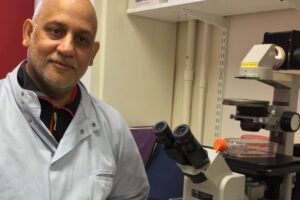
Finding new ways to beat childhood neuroblastoma
Research Finding new ways to beat childhood neuroblastoma Neuroblastoma is one of the most common childhood tumours. We’ve been working hard…
Read more Finding new ways to beat childhood neuroblastoma