Teddy’s Leukaemia Story
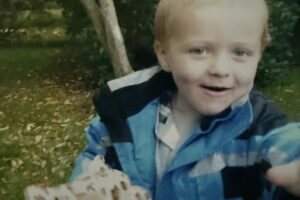
Teddy was only 3 when he was diagnosed with Leukaemia. His father, Sam is sharing Teddy’s story and how it inspired him to run the London Marathon.

When you are given some awful news – try not to automatically assume the worst. This is so easily done, to think that your child is going to die. But the treatment and continuous research is fantastic and now outlooks are better than ever. The staff are all amazing at what they do


Something is not right
It began in June 2024. Teddy was three years old at the time and due to start Reception in September. We were all really excited about this next big step in life. After visiting the GP for his standard pre-school vaccinations, we noticed that for the following week or so he seemed a really pale colour. He seemed fine in himself though but despite this we visited the GP again who told us this can happen following vaccinations, and his colour should return to normal within another week or so. We were used to our kids developing a mild temperature maybe a couple of days post vaccinations, but he didn’t have this, besides his colour, he seemed fine.
Another week passed and his colour had still not returned to normal. However, on this particular day, Teddy woke up with a raging temperature and was extremely lethargic. His colour had also changed from appearing pale, to now looking jaundice.
His mum and I took him to the local urgent care centre and waited for the doctor to see him. The doctor advised us that Teddy had tonsillitis and would prescribe him antibiotics. Immediately this diagnosis did not sit right with us, we felt there was something more to it than that and Teddy needed a more thorough assessment. Teddy’s mum had that “mothers instinct”. We decided to take Teddy to another hospital; one I was more familiar with in my role as a paramedic. Once there, Teddy’s condition did not improve. The staff were brilliant however and took all our concerns seriously from the outset. He had deteriorated significantly in the 10 hours we’d waited in A&E, and so was diagnosed with sickness and diarrhoea and it would sort itself and we were to go home. Teddy’s mum didn’t know what she was expecting to be wrong with him, but knew that wasn’t right, so refused to leave hospital until a blood test had been done to rule anything else out. The doctor listened to mum’s concerns and even though he reassured her there was nothing sinister, did the blood test.
Diagnosis
Teddy stayed in hospital throughout the night with his mum whilst I returned home to look after our two daughters, aged 5 and 1 at the time. The next morning, I was called by my wife, telling me I needed to return to the hospital immediately. She later told me that the bloods had come back and the doctor was talking to her about Leukocytes and white blood cells, so she asked him outright ‘Are you telling me he’s got cancer?’ We were taken into a room by a doctor, and two nurses urged us to sit down. That is when I personally thought “This can’t be good news”. As things stood, the diagnosis was not certain, but the two we were given were aplastic anaemia and leukaemia.
I don’t think news like that get processed right away. It is only natural that the immediate question was “Is he going to die?” So many questions now came into our minds. What was life now going to look for us as a family going forwards.
Once we were given the news, we were told Teddy was to be immediately transferred to Royal Manchester Children’s Hospital. We offered to drive him ourselves but were told an ambulance had already been arranged and was on its way. Moments like this made us realise how serious this could potentially be, despite still not knowing for sure what Teddy would actually be diagnosed with.
When we arrived on the first ward at Manchester Children’s Hospital and saw all the other children, this is when it really started to sink in. Following more tests, we were introduced to one of the oncology consultants who informed us with the words no parent ever wants to hear ‘Teddy has Acute Lymphoblastic Leukaemia’. At least we now knew. The consultant was amazing in those early times, reassuring us and talking us through the initial stages and how life was going to look going forward. It was important to try and stay as positive as physically possible, for Teddy and for our daughters at home. You become impatient at times, wanting answers fast, even to things that may be impossible to answer there and then.
The plan
Teddy was moved to Ward 86 and was due to stay there for the next 6 weeks and begin intensive chemotherapy and steroid treatment whilst continuing to have various other tests and procedures. He was scared, he didn’t understand why he couldn’t just go home. Teddy really struggles with new surroundings and a change of routine, and this was extreme. Teddy was fitted with a portacath in his chest which allowed easier access than having repeated cannulas each time he needed his medication. This was still a traumatic experience for him each time. Life as we knew it had been put on hold. Teddy’s mum and I would take it in turns to stay on the ward with Teddy, while the other would stay at home with the girls. We began by swapping daily, however soon swapped every other day due to the prolonged travel times and strain placed upon the girls.
Three weeks in and we were beginning to feel slightly optimistic that he may be allowed home for a short while once the induction was up. Unfortunately, this was when Teddy began to experience excruciating pains in his stomach. He was in tears. His stomach began to look distended. He stopped eating. It was initially put down to constipation. It wasn’t. He had appendicitis. Worse was to come. His appendix then ruptured. We were told surgery was the last option, as then his chemotherapy would have to stop indefinitely. The plan was now to rest him with strong antibiotics. He became really unwell. He stopped talking. He was unable to get out of bed. He had a drain inserted into his stomach to empty the poison coming from his appendix. He had a catheter fitted. He also had an NG tube. It was awful seeing him like this. He was on nil by mouth and put on PN (food replacement). The pain was so excruciating for him he was on every drug imaginable. IV paracetamol, morphine, ketamine and many others. But nothing seemed to touch the pain, and it felt like an eternity listening to our little boy scream with no relief.
Home visits
Teddy ended up staying on the ward for approximately 10-11 weeks. Most of this time was spent in bed. He was then unable to sit up himself, unable to stand, unable to walk. he was given daily physiotherapy. He was also provided with a wheelchair. At this point we were told Teddy could come home for 24 hours before returning for more tests and treatment. We really didn’t care at this point; we just wanted him home! It felt like a huge step. The hour drive home was more nerve wracking than the drive when you bring your first newborn home.
Our new normal became taking Teddy to and from Manchester Children’s Hospital for appointments, two or three times a week, sometimes more. On a good day it would take an hour each way. We didn’t mind though; it was worth it just to have him home. His sisters were so excited to have their brother back home.

School support
Teddy managed to get well enough to attend his first day of Reception. We stayed with him for an hour or so before he became too tired. To see his and his friends faces was amazing! School and the community were fantastic with him. Nothing was too much trouble. Teddy is such a big personality and enjoys school, especially the days he does PE.
Life now and side effects
Teddy still attends hospital for planned appointments, has weekly visits from the community nursing team who take and check his blood. He also has chemotherapy every day and a week of steroids once a month.
It has taken a long time to get to this point in Teddy’s treatment. We have seen several side effects that unfortunately come with this type of illness. He suffers from extreme tiredness at times, irregular sleep patterns and fluctuating moods. He can also become extremely itchy whilst on steroids. His appetite also becomes affected, either having a huge appetite or at times, none. He must be monitored closely at school for any head injuries or any trauma to the site of his portacath which remains in until treatment has finished. But Teddy is excelling at school. Despite his drastically reduced attendance since the start of last year, he is meeting all of his age-related expectations.
Teddy is also on the autism pathway. In addition to his illness, we knew and dreaded the sensory struggles that were to come with it. The wires coming out of him, the flavours of medicines, he feels and tastes medications even when given intravenously. He has made huge strides recently in several areas, one example being he now enjoys getting his haircut. This used to be a hugely upsetting event for Teddy who is very sensitive to noises and the feel of certain things, but he now looks forward to it.

During the journey, especially right at the beginning – talk to the other families. The parents of other children who are going through the same or similar. We found comfort in talking to other mums and dads who were maybe ahead of your journey, but they’ve been there, it really does help. Take all the help that is offered and given. If people ask you what you need, let them cook for you so it’s one less thing to worry about. All the small things too. Often, people will have nothing when they are first taken onto the ward, a bag with a few small bits at most. One of the best things Teddy received in these first few days was a bag – full of essential items you will inevitably need but don’t have with you.
Teddy’s sisters
When Teddy was diagnosed with ALL, Teddy’s older sister was given a children’s book about siblings being diagnosed with cancer. She didn’t want to read it. She knew he was very poorly but didn’t want to talk about it. The term we used with all the children was that Teddy had “naughty blood” and needed help to get better. We noticed a change in the behaviour of both our daughters following Teddy’s diagnosis. His older sister became angry at times. She was supported through this with counselling and talking therapies. His younger sister was too young to understand. She would often ask when she could visit Teddy. She missed the special bond with her mum and became very upset whenever separated.
We are very fortunate that we have a huge amount of love and support from friends and family. This support was not just for Teddy but for us and the girls too. Our friendly, family and colleagues truly prosper us up in the worst moments of our lives. At times, we think the girls could feel Teddy was getting a huge amount of attention, so we knew we had to make it a priority to make them feel special too. This was one of the reasons we decided to swap who would stay with Teddy every other day, to allow time for the girls too.


Marathon
Prior to Teddy’s diagnosis I was a casual runner. I had always been fit and active, playing various sports until daily life gets in the way. I had applied for a place in The London Marathon months before Teddy’s diagnosis but was unsuccessful. Shortly after his diagnosis, I received an email out of the blue from Children with Cancer UK offering me a charity place in The London Marathon 2025. My initial thoughts were how could I possibly entertain this now with what we were dealing with as a family. I was eventually persuaded by my wife who said this could be a once in a lifetime opportunity and it’s almost as if it’s fate. So, I accepted the place, created a fundraising page and began training when time allowed. I received a lot of advice from people to soak up the atmosphere and remember it all. On 27th April 2025, which is also my birthday, I completed the London Marathon in 3 hours 54 minutes in honour of Teddy and all the other children like him. I also raised over £6,500. It felt like the greatest achievement.
In the weeks that passed, I felt I needed a new goal. Something to run towards again. I was over the moon when I was offered a charity place once again with Children with Cancer UK. To support a charity that is so close to our hearts, so recognisable, is a privilege. Training is going well; it never stopped in all honesty. I just hope to make Teddy proud once again.
Sam, March 2026
Teenage and Young Adult Cancer Awareness Month 2026
Childhood cancer survivor shares his story for Teenage and Young Adult Cancer Awareness Month after completing a marathon and inspiring others to follow.
Read more Teenage and Young Adult Cancer Awareness Month 2026
Alfie’s Glioblastoma Story
Alfie’s Glioblastoma Story Alfie was only 3 months old when his dad noticed something wasn’t right. Read his full story…
Read more Alfie’s Glioblastoma Story
2026 Research Grant Call launched
Children with Cancer UK launches the 2026 Research Grant Call to accelerate breakthroughs in childhood cancer
Read more 2026 Research Grant Call launched
Emil’s Brain Tumour Story
Emil’s Brain Tumour Story Hear Emil tell his story of his brain tumour diagnosis when he was 9 and how…
Read more Emil’s Brain Tumour Story
Ren’s Neuroblastoma Story
Ren’s Neuroblastoma Story Ren was diagnosed with Neuroblastoma at just eight months old. His mum Harriot is sharing his story….
Read more Ren’s Neuroblastoma Story
Brain Tumour Awareness Month
Children with Cancer UK is raising awareness & funding new research to deliver more targeted treatment for children with brain tumours
Read more Brain Tumour Awareness Month
Fundraiser of the Month: Darragh
Fundraiser of the Month: Darragh Our Fundraiser of the Month for March 2026 goes to Darragh, who took on the…
Read more Fundraiser of the Month: Darragh
Patient Story – Daithi
Daithi’s Story: Living with Neuroblastoma Daithi was diagnosed with neuroblastoma, a rare childhood cancer. His parents, Gemma and Connor, tell his…
Read more Patient Story – Daithi
Sound Bites: A new food & music festival launches this spring
Sound Bites London will take place at Syon Park on Friday 8th & Saturday 9th May 2026 in support of Children with Cancer UK. At least £10 from every ticket sold will be donated directly to the charity.
Read more Sound Bites: A new food & music festival launches this spring
Early diagnosis key to improving childhood cancer survival
A major study by UCL and Fondazione IRCCS Istituto Nazionale dei Tumori in Milan (INT) researchers is the first to show that differences in tumour stage at diagnosis may explain why childhood cancer survival varies between some European regions and tumour types.
Read more Early diagnosis key to improving childhood cancer survival