Understanding Cancer
What Is Neuroblastoma In Children?
Neuroblastoma in children is a cancer of the nerve cells that mainly affects babies and infants, with around 83 cases diagnosed in the UK each year. Understanding what neuroblastoma in children is, alongside other childhood cancer types, can help families recognise symptoms earlier and access support sooner.
Neuroblastoma overview
Neuroblastoma is a cancer that develops in nerve cells. It mostly affects babies and children under the age of five. Neuroblastoma tumours most often occur in one of the adrenal glands, in the abdomen. First symptoms are loss of appetite, tiredness and pain in the bones, it affects around 83 children per year in the UK.
Neuroblastoma is the most frequently occurring solid tumour in infants under the age of one, accounting for around a fifth (22%) of all cancers diagnosed at this age. The incidence of neuroblastoma is rare after the age of five. Tumours of the sympathetic nervous system (SNS) account for 5% of all childhood cancers in Great Britain, and nearly all tumours of the SNS are neuroblastoma (including ganglioneuroblastoma).
What is neuroblastoma?
Neuroblastoma is a cancer of specialised nerve cells, called neural crest cells. These cells are involved in the development of the sympathetic nervous system and other tissues.
It can occur anywhere in the body, but it most often occurs in one of the adrenal glands, in the abdomen close to the kidneys. In some children, it occurs in nerve tissue alongside the spinal cord in the neck, chest, abdomen or pelvis.
Neuroblastoma is the most common form of embryonal tumour. Embryonal tumours are characterised by the proliferation of tissue that is normally only seen in the developing embryo. They are mainly seen in very young children.
What are the symptoms of Neuroblastoma?
Symptoms that may indicate neuroblastoma include:
- loss of appetite
- tiredness
- pain in the bones
- small, blue-coloured lumps
- weakness in the legs
- swollen belly
- difficulty swallowing and breathing
What type of cancer is neuroblastoma?
Incidence
Neuroblastoma accounts for 6% of childhood cancer registrations in the UK, with around 95 diagnoses annually. As with all embryonal tumours, neuroblastoma is most common in children under the age of five years and extremely rare after the age of 10 years. Its incidence is highest in babies under one – it is the most frequent single type of cancer in the first year of life, accounting for one fifth of cancers in this age group. It is slightly more common in boys than in girls, by a ratio of 6:5.
Diagnosis

What would you expect to happen first, when you see your GP?
A variety of tests and investigations may be needed to diagnose a neuroblastoma cancer. These include:
- blood, urine or bone marrow tests
- X-rays
- CT or MRI scans
- mIBG scans
These tests confirm the diagnosis and help doctors to determine the best way to treat the tumour.
mIBG is a substance that is specifically taken up by neuroblastoma cells. It is given by injection with a tiny amount of radioactive attached to enable the tumours to be seen by a radiation scanner. mIBG may also be used to deliver treatment directly to the tumour. Tumour cells are taken by biopsy to look confirm the diagnosis and to look at the chromosomes and other ‘biological markers’ which help inform the type and intensity of treatment required. If a certain level of a gene marker called MYCN is detected it indicates that the tumour is high-risk and that treatment needs to be more intensive.
Staging of Neuroblastoma
The stage of a cancer describes how far it has grown or spread. The stage is important because it helps determine the best treatment. There are four main stages of neuroblastoma cancers:
- Stage 1 means the tumour is in one area of the body and hasn’t spread. It can be completely removed with surgery
- Stage 2 is divided into 2A and 2B. In 2A, the tumour can’t be completely removed with surgery because of its size or position, but there are no cancer cells in any lymph nodes. In stage 2B, it may or may not be possible to completely remove the tumour, but it has spread to nearby lymph nodes
- Stage 3 means that the tumour can’t be completely removed with surgery and there is either tumour on both sides of the body (either side of the spine) or there is tumour on one side of the body and lymph nodes containing cancer cells on the other
- Stage 4 neuroblastoma means that the cancer has spread to parts of the body that are some distance from where it started
Stage 4S is a special case, as it has a better outlook than other stages. Stage 4S means the child is younger than one year at diagnosis. The tumour may have spread to the liver or skin, but not to the bones. And no more than 10% of cells in the bone marrow are neuroblastoma cells.
Children with stage 4S neuroblastoma almost always get better with very little treatment or none at all. These tumours either regress spontaneously or after chemotherapy success, which is only given if the tumour is causing symptoms. They disappear completely or develop into a non-cancerous (benign) tumour, called a ganglioneuroma. Many of these children, after their initial diagnostic tests and staging investigations, will just need careful monitoring for some years.
A newer staging system has been developed by the International Neuroblastoma Risk Group (INRG). This system looks at whether or not certain ‘image-defined risk factors’ are present in a tumour before treatment. These risk factors can be detected by scans and help doctors understand the extent of the disease.
- Stage L1 – the tumour is localised and has not spread into vital structures nearby. It can be removed by surgery
- Stage L2 – the tumour is localised but has ‘image-defined risk factors’ and can’t be safely removed by surgery
- Stage M – the tumour has spread to other parts of the body
- Stage MS – the tumour has spread to the skin, liver and/or the bone marrow in children younger than 18 months old. If the cancer has spread to distant parts of the body, this is known as secondary or metastatic cancer
Treatment
What would you expect to happen during treatment?
The treatment of neuroblastoma depends on the age of the child, the size and position of the tumour, the tumour biology (including the MYCN status) and whether it has spread.
For early-stage tumours which have not spread, surgery alone may be sufficient to get rid of the cancer. If the tumour is classed as high risk, chemotherapy and possibly radiotherapy and other treatments will also be needed. If the tumour is too large, or in too difficult a position to remove safely, chemotherapy will be given to shrink it before surgery.
If the tumour has spread to several parts of the body or is high-risk with MYCN amplification, high-dose chemotherapy is used to eradicate any remaining neuroblastoma cells. High-dose chemotherapy also destroys the child’s bone marrow, so stem cell rescue will be required. This involves collecting blood stem cells from the child before chemotherapy and returning them afterwards, via a drip. The stem cells make their way back into the bone marrow where they grow and develop into mature blood cells over a period of several weeks.
Radiotherapy may be used if the neuroblastoma is classed as high-risk or if it has spread to several parts of the body. This may be either external radiotherapy, delivered from a machine outside the body, or internal radiotherapy using radioactive mIBG.
What is happening in the body and are there any side effects?
The possible side effects depend on the treatment given and the part of the body being treated but may include
- nausea and vomiting
- hair loss
- reduced resistance to infection
- bruising and bleeding
- tiredness
- gut and nutritional symptoms
These problems are all temporary and can be minimised with good supportive care.
A number of children may develop persistent side effects as a result of treatment, sometimes many years later, these are known as late effects. These can include
- possible problems with heart and kidney function
- hearing problems
- fertility problems
- a possible reduction in bone growth especially if radiotherapy has been used
- and a small increase in risk of developing another cancer
Follow up
Children will have regular follow-ups to check for any recurrence of the cancer and for any late effects of treatment.
If the cancer comes back after treatment it is called relapse. The risk of relapse can be linked to certain risk factors.
Generally, the outlook is likely to be better if:
- the child is younger
- the cells are more normally developed and so the cancer is likely to grow more slowly (this is called ‘low grade’
- the neuroblastoma cells do not have a particular abnormal gene called MYCN
How effective are the treatments – What are the survival rates?
Localised neuroblastoma has a very high chance of being cured. Tumours that have spread especially those with MYCN amplification are more challenging but recent advances in therapy and research continue to improve the outlook for these children.
Can neuroblastoma come back?
Children will have regular follow-ups to check for any recurrence of the cancer and for any late effects of treatment.
If the cancer comes back after treatment it is called relapse. The risk of relapse can be linked to certain risk factors.
Generally, the outlook is likely to be better:
- if the child is younger
- the tumour remains localised to one area and has not spread
- the cells are more normally developed so the cancer is likely to grow more slowly (this is called ‘low grade’)
- the neuroblastoma cells do not have a genetic abnormality such as the MYCN gene
Research

Many children have their treatment as part of a clinical trial.
Trials aim to improve our understanding of the best way to treat the cancer, usually by comparing the standard treatment with a new or modified version.
If appropriate, the child’s medical team will discuss participation in a relevant trial. Participation is optional but may offer the opportunity to receive new treatments.
Children with Cancer UK is funding a number of research projects focused on neuroblastoma.
Alice was diagnosed with neuroblastoma just a week before her second birthday. Read more to learn about her neuroblastoma story.
Emma’s story
Read about Emma’s journey with neuroblastoma, as told by her mum, Samantha.
Emma developed a cough; the doctors said it was normal as she had started teething. The cough never seemed to go away but the doctors said it was a just a cold or a viral infection. On 12 November 2006, we took Emma back into hospital because she was still in pain. We saw a different doctor in A&E and he found a lump in Emma’s belly. Our lives changed forever. Emma was diagnosed with stage 4 high risk neuroblastoma on 27th November 2006. She was just two years old at the time. That evening the doctor told us she only had a 20% chance of surviving. We used this as a positive – we had a chance!
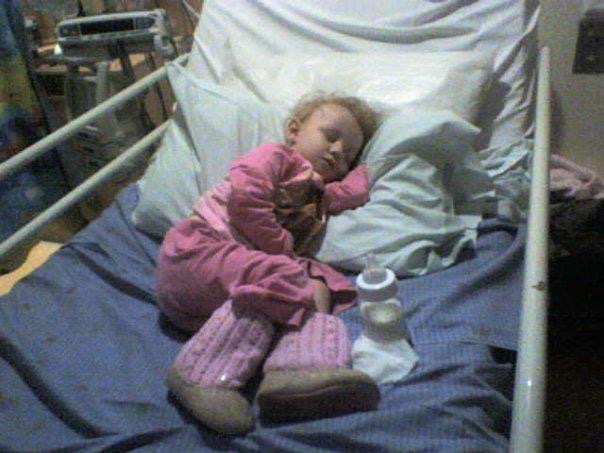
Emma did her nine months of maintenance chemotherapy and was told not every child can finish this part of treatment as it cracks the skin, dries it out and it almost looks like they have been burnt. Yet again Emma was amazing, she took all 22 tablets a day.
Emma responded well to all the chemotherapy she was given and the tumour shrunk by more than half its size in just four rounds; her bones and bone marrow were all clear, which was amazing.
Emma is nine years cancer free. I can’t believe how quickly it has gone. These last nine years have been truly amazing, watching Emma grow into a lovely young girl.
If you’ve been touched by Emma’s journey, help us invest in the high quality research that really matters which would otherwise go unfunded. This helps to support children with cancer so they can be with their families for longer. Read more about Emma’s journey with neuroblastoma and her life after beating cancer.