Dissecting apart the biology of childhood lymphoma in Africa towards improving treatment outcome

Project Details
- Dissecting the intra-clonal heterogeneity of endemic Burkitt lymphoma towards improved treatment outcomes
- Lead Researcher
- Prof. Suzanne Turner
- Research Centre
- University of Cambridge
- City & Institution Postcode
- Cambridge, CB2 0QQ
- Start Date
- 01/06/2026
- Project Duration
- 36 months
- Grant Amount
- £384,906.78
Overview
We want to understand why children diagnosed with Burkitt lymphoma in Sub-Saharan Africa, the so-called endemic form of this disease, have poor survival outcomes by studying the unique biology of this disease. Whilst social and economic factors undoubtedly play a role, we do not know if the underlying biology differs from that of children diagnosed with sporadic Burkitt lymphoma in high income countries. If we understand the unique biology, we can design better treatment approaches.
What difference will this project make?
Having determined the biology of endemic Burkitt lymphoma with regards to how the tumour cells respond to treatment, we will be able to inform on treatment approaches. At present, children in the UK are treated with toxic drugs that often require support in intensive care, but survival rates are high – this makes it difficult to try new, less toxic drugs because we don’t want to risk trying something novel and survival not being as good. At the same time, as survival is already greater than 95% despite the toxic side-effects, just adding a new drug to the existing treatment approach is not ideal as it is unlikely to make any significant difference to the patients. In contrast, in Sub-Saharan Africa, children receive chemotherapy at lower doses because they do not have the facilities to care for very sick children.
It is not surprising that this leads to inferior survival outcomes for these children who also often fail to finish treatment due to a number of social and economic factors. In essence, we have a lot to learn from one another and arguably, children in Sub-Saharan Africa stand to benefit more from the identification of new treatment approaches which are less toxic and can perhaps be given as outpatients. In turn, children in the UK may benefit from this approach whereby we may learn which are the best new treatment approaches to trial in high income settings without risking a decrease in survival outcomes.
Whilst this may be some 10 years off, starting now to tease apart the biology of endemic compared to sporadic Burkitt lymphoma will give us some clues as to the best approaches to use in future trials. During this time, we also need to build the infrastructure required to run childhood cancer trials in Africa, work that is ongoing within the international society for paediatric oncology-Africa branch. We anticipate that the results or our research will align with this activity towards implementation.
About the research team
Our multinational research team are based in both the UK and Uganda and have been working together since 2017. Our team brings together biology researchers based in the UK with significant experience in studying childhood cancer biology, with clinicians and researchers in Uganda with intimate knowledge and experience of cancer in Uganda. In particular, our co-applicant Dr Jackson Orem is a trained cancer doctor who conducted his PhD studying endemic Burkitt Lymphoma and is therefore a world-leading expert in this unique childhood cancer. Our other co-applicant, Prof Suzanne Turner is a leading researcher at the University of Cambridge who is internationally recognised for her work on understanding the biology of lymphoma in children. She also plays key roles in the international childhood cancer community and has been warmly accepted into this community in Africa, specifically Uganda.
Together, they have the expertise and networks required to lead this programme of research and to see it through to real world benefits. All of the background work required for the success of this project has been conducted according to strict ethical guidelines and having established a bioresource of this childhood cancer, the team are now in the position that they can reap the rewards of their hard work to date.

About the research team
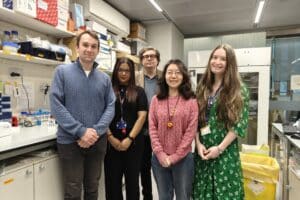
In Cambridge, Dr Adiba Khan (pictured left) will lead the biological aspects of the project having been part of the team for the past 2 years and therefore able to hit the ground running. Adiba has significant experience of working with mouse models of cancer and has developed a deep knowledge of this disease.
In Uganda, Godwin Winston will continue to process samples for downstream analysis at the same time as receiving training in biological research which will transition to our lab in Uganda within the newly built Uganda Cancer Institute research hospital. Our combined experience makes us the ideal team to conduct this research project.
Other stories
We have lots of information to help you learn more about childhood cancer. From specific cancer types, to treatments and causes.
Understanding the control of a cancer causing protein in Desmoplastic Small Round Cell Tumour (DSRCT) to develop new targeted treatments.
We’re funding a research project focused on understanding the control of a cancer causing protein in Desmoplastic Small Round Cell Tumour (DSRCT) to develop new targeted treatments.
Read more Understanding the control of a cancer causing protein in Desmoplastic Small Round Cell Tumour (DSRCT) to develop new targeted treatments.
Advancing new therapies against germ cell tumours in children and young adults – decreasing side effects, overcoming resistance
The team’s proposal aims to advance a promising new therapeutic approach against germ cell tumours from the bench, towards the clinic and patient benefit.
Read more Advancing new therapies against germ cell tumours in children and young adults – decreasing side effects, overcoming resistance
Tracking the spread of metastatic medulloblastoma to identify key drivers of disease progression and therapeutic vulnerabilities
This research addresses a critical gap in our understanding of how medulloblastoma, a fast-growing and often aggressive brain cancer that primarily affects children, spreads to other parts of the brain and spine (a process called metastasis).
Read more Tracking the spread of metastatic medulloblastoma to identify key drivers of disease progression and therapeutic vulnerabilities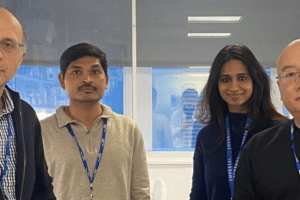
Making immunotherapy more powerful for high-risk acute leukaemia
Making immunotherapy more powerful for high-risk acute leukaemia Project Details Overview The most common cancer in children is a type…
Read more Making immunotherapy more powerful for high-risk acute leukaemia
Can targeting RNA help treat children with neuroblastoma?
Can targeting RNA help treat children with neuroblastoma? Project Details Overview Neuroblastoma is a childhood cancer that mainly affects babies and young…
Read more Can targeting RNA help treat children with neuroblastoma?
The BIOMECA2 Study: Linking tumour biology to better treatment in a study of an aggressive childhood brain tumour
The BIOMECA2 Study: Linking tumour biology to better treatment in a study of an aggressive childhood brain tumour Project Details…
Read more The BIOMECA2 Study: Linking tumour biology to better treatment in a study of an aggressive childhood brain tumour
Looking for early signs on brain MRIs that can predict whether young people with ependymoma will go on to experience cognitive problems
Looking for early signs on brain MRIs that can predict whether young people with ependymoma will go on to experience…
Read more Looking for early signs on brain MRIs that can predict whether young people with ependymoma will go on to experience cognitive problems
Developing immunotherapy for childhood sarcomas.
Research Developing immunotherapy for childhood sarcomas. Some childhood cancers don’t respond well to chemotherapy, but there is hope in the…
Read more Developing immunotherapy for childhood sarcomas.
Childhood cancer immunotherapy using blood cells from umbilical cord blood.
Research Childhood cancer immunotherapy using blood cells from umbilical cord blood. Immunotherapy is an important new approach in the treatment…
Read more Childhood cancer immunotherapy using blood cells from umbilical cord blood.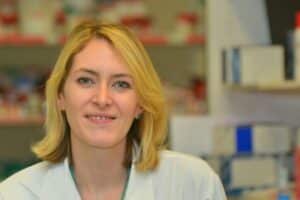
Focusing on immunotherapy to target cancer cells without damaging healthy cells
Research Focusing on immunotherapy to target cancer cells without damaging healthy cells Developing new treatments for childhood cancers can be…
Read more Focusing on immunotherapy to target cancer cells without damaging healthy cells