Advancing new therapies against germ cell tumours in children and young adults – decreasing side effects, overcoming resistance
The team’s proposal aims to advance a promising new therapeutic approach against germ cell tumours from the bench, towards the clinic and patient benefit.

Project Details
- Advancing new therapies against Germ Cell Tumours and young adults – decreasing side effects, overcoming resistance
- Lead Researcher
- Dr Peter Nicholls
- Research Centre
- University of Bradford
- City & Institution Postcode
- Bradford, BD7 1DP
- Start Date
- 01/01/2026
- Project Duration
- 30 months
- Grant Amount
- £286,841.09
Overview
Since the introduction of cisplatin as a first-line therapy for germ cell tumours (GCTs) in the 1980s, five-year survival rates have exceeded 90%. While survival rates are high, these are associated with long term toxic side-effects, which is particularly relevant to a young patient cohort. Additionally, chemoresistance is relatively common, leading to ~65 deaths each year in the UK (and around 10,000 globally).
This pioneering early success has stymied further progress, with the consequence that toxic side-effects and resistance associated with current therapy have remained unaddressed for the past 40 years. While several clinical trials have been initiated for new agents, none have been substantially safer or more effective than first line therapeutic regimes developed in the 1980s.
We have approached this challenge through a new lens: by investigating why GCTs are well treated, with the goal of identifying new vulnerabilities. Our genetic studies in mice and cell culture analyses have converged on the BCL2 family of proteins, for which several drugs are being tested in other cancer contexts. Our goal is to progress our promising laboratory data into animal xenograft models as an immediate precursor to human clinical studies.
The team’s proposal aims to advance a promising new therapeutic approach against germ cell tumours from the bench, towards the clinic and patient benefit. The new approach has potential to decrease side-effects of current treatments and tackle resistant disease.
The team’s goal is to provide sufficient evidence of effectiveness in advanced tumour models that can be used as the foundation for first-in-human studies within 5 years.
What difference will the project make?
If our studies are successful, they will provide in-principle evidence that supports further clinical consideration. The likely next step would be as an additional treatment in chemoresistant disease, where no reliable therapies currently exist.
Given the high cure rate for GCTs, any testing of a new first-line therapy would need to carefully evaluate our approach in phased de-escalation studies. If our approach is successful at each step, it would likely bring about targeted therapies that are kinder and gentler for the young patient cohort, by reducing the dose of cisplatin and limiting side-effects that include an elevated risk of secondary cancers, infertility, deafness, and heart disease.
For individuals with a poor prognosis, this approach could yield a life-saving therapy, which currently claims around 65 lives each year in the UK.
About the researchers
Our multi-centre collaborative project utilises the individual and collective expertise of three research teams. Dr Peter Nicholls (PI, Institute of Cancer Therapeutics, Bradford) has a long-standing interest in the biology of germ cell tumours (GCTs). Peter has previously characterised the origin of GCTs from embryonic cells that fail to appropriately undertake ‘commitment’ in the embryo, has mapped genes critical for teratoma development in mice, and is the primary supervisor of two PhD students focussed on GCT biology, including of the role of BH3-mimetics as sensitisers to chemotherapy. Peter is deputy-chair of the Biology committee of the Malignant Germ cell International Consortium, which includes co-organisation of a monthly international seminar series and annual meeting of basic scientists, clinicians, and patient representatives.
Associate Professor Steve Shnyder (Co-I) leads the in vivo pharmacological testing unit at the Institute of Cancer Therapeutics (Bradford). Steve has >25 years experience in pre-clinical cancer pharmacology, with a current project license that covers the proposed work. Peter and Steven will supervise the research undertaken in WP1A and WP2.
Associate Professor Simon Allison (Huddersfield) is a cancer biologist who has established 14-day ‘tumour in an egg’ xenograft models that we will use to assess our new combined therapy with speed, and in an ethically sound model prior to mouse and human studies. The funding is sufficient to support an experienced research scientist in Simon’s laboratory, Dr Ana Texeria, to undertake WP1B & 1C.
Professor Rod Mitchell (Edinburgh) is a Clinician Scientist and Paediatric Endocrinologist, dedicated to advancing fertility preservation in childhood cancer survivors, and on improving our understanding of the development of testicular cancer from embryonic cells. Prof. Mitchell has pioneered the ex vivo culture of embryonic gonads in cell culture and in xenograft models, and is a founder of the Edinburgh Fertility Preservation centre. Prof. Mitchell is a current recipient of Children with Cancer UK funding, for an unrelated project focussed on restoring fertility after childhood cancer (completion in 2026).
Other stories
We have lots of information to help you learn more about childhood cancer. From specific cancer types, to treatments and causes.

Tracking the spread of metastatic medulloblastoma to identify key drivers of disease progression and therapeutic vulnerabilities
This research addresses a critical gap in our understanding of how medulloblastoma, a fast-growing and often aggressive brain cancer that primarily affects children, spreads to other parts of the brain and spine (a process called metastasis).
Read more Tracking the spread of metastatic medulloblastoma to identify key drivers of disease progression and therapeutic vulnerabilities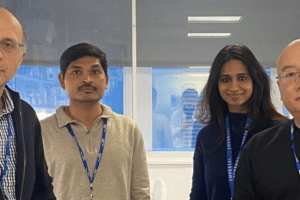
Making immunotherapy more powerful for high-risk acute leukaemia
Making immunotherapy more powerful for high-risk acute leukaemia Project Details Overview The most common cancer in children is a type…
Read more Making immunotherapy more powerful for high-risk acute leukaemia
Dissecting apart the biology of childhood lymphoma in Africa towards improving treatment outcome
Dissecting apart the biology of childhood lymphoma in Africa towards improving treatment outcome Project Details Overview We want to understand…
Read more Dissecting apart the biology of childhood lymphoma in Africa towards improving treatment outcome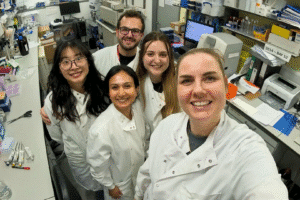
Can targeting RNA help treat children with neuroblastoma?
Can targeting RNA help treat children with neuroblastoma? Project Details Overview Neuroblastoma is a childhood cancer that mainly affects babies and young…
Read more Can targeting RNA help treat children with neuroblastoma?
The BIOMECA2 Study: Linking tumour biology to better treatment in a study of an aggressive childhood brain tumour
The BIOMECA2 Study: Linking tumour biology to better treatment in a study of an aggressive childhood brain tumour Project Details…
Read more The BIOMECA2 Study: Linking tumour biology to better treatment in a study of an aggressive childhood brain tumour
Looking for early signs on brain MRIs that can predict whether young people with ependymoma will go on to experience cognitive problems
Looking for early signs on brain MRIs that can predict whether young people with ependymoma will go on to experience…
Read more Looking for early signs on brain MRIs that can predict whether young people with ependymoma will go on to experience cognitive problems
Developing immunotherapy for childhood sarcomas.
Research Developing immunotherapy for childhood sarcomas. Some childhood cancers don’t respond well to chemotherapy, but there is hope in the…
Read more Developing immunotherapy for childhood sarcomas.
Childhood cancer immunotherapy using blood cells from umbilical cord blood.
Research Childhood cancer immunotherapy using blood cells from umbilical cord blood. Immunotherapy is an important new approach in the treatment…
Read more Childhood cancer immunotherapy using blood cells from umbilical cord blood.
Focusing on immunotherapy to target cancer cells without damaging healthy cells
Research Focusing on immunotherapy to target cancer cells without damaging healthy cells Developing new treatments for childhood cancers can be…
Read more Focusing on immunotherapy to target cancer cells without damaging healthy cells
Causes Cancers Blood
Finding out why some children get rare cancers of the blood. At the moment, we don’t know the cause of…
Read more Causes Cancers Blood