Understanding cancer
Remission: What does it mean to be in remission?
Topics on this page
- What does remission mean?
- What does partial or complete remission mean?
- Remission and MRD
- What happens in remission?
- Will the cancer recur?
- Remission stories
Why do children get cancer?
Learn about the causes of childhood cancer and the research behind it.
What does remission mean?
A child with cancer is said to be in remission when the symptoms of the disease disappear or lessen after treatment. Depending on the impact of the treatment, remission can be either partial or complete; however, this doesn’t mean the cancer is fully cured and there is always a risk for recurrence.
What does partial or complete remission mean?
If a child is informed that they are in remission, this means that after conducting a number of tests related to their specific cancer, they have concluded that the signs and symptoms of the cancer has reduced. There are two types of remission:
Partial remission – If the tumour or cancer cells haven’t disappeared but have retreated or stopped growing, the child with cancer will enter the stage of partial remission.
Complete remission – If cancer signs and symptoms fully disappear after treatment, patients will be in complete remission. However, despite medical tests, it is impossible for doctors to tell if cancer cells will become active in the future, and therefore can not say the child is “cured”. The terminology they will normally use is that there is “No Evidence of Disease” (NED).
Remission and MRD
In the specific case of blood cancer, if the levels of leukaemic cells are below one thousand million, the cancer can’t be detected by a microscope. This means that even in remission, the child’s cancer may relapse due to Minimal Residual Disease (MRD). In 2003, after years of research (and a £3 million contribution from Children with Cancer UK), a new technique emerged that helped doctors predict the risk of recurrence due to MRD. It is thought that this innovation may drive the survival rate for childhood ALL above 90%.
What happens in remission?
Being in remission, whether partial or complete, is an important milestone in the journey of children fighting cancer. It is a moment to take a break from treatment and re-enter a more normal life. However, monitoring the child and the disease will remain very important to ensure the cancer is kept in check.
Once in remission, the doctors will create a plan for the next months (or years) with the objective of monitoring and ensuring the cancer doesn’t come back and also being able to react as quickly as possible in case of recurrence. The new plan will be tailored to the child’s new circumstance and will involve regular visits to the doctors, tests, adapted medication and other therapies. It will mean a step back from the pressures of treatment but not a complete independence.
While being in remission can bring an air of optimism, children and families will also have to handle the uncertainty of potentially seeing the cancer recur. Having the medical needs covered will help, but it is also important for families to focus on communication with their child. Children should be able to feel good about being in remission and know that it is an important step, as well as being comfortable communicating if something feels bad.
Will the cancer recur after remission?
There is always a risk of cancer recurrence, so it is good to see remission as a positive step in the recovery journey, but not as the final one. It is very useful to lean on the team of doctors as much as possible. They will be able to communicate the possible future scenarios the family might face and they will also know the recurrence rate for the cancer the child is battling.
Types of cancer treatments
Remission stories
If you have a child that is currently in remission, it is normal to have questions and to try to understand the new situation as well as possible. The blogs below are first-hand accounts from families affected by childhood cancer and their experiences with being in remission.
Other stories
We have lots of information to help you learn more about childhood cancer. From specific cancer types, to treatments and causes.
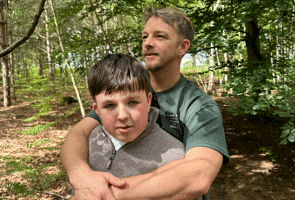
Alfie’s Glioblastoma Story
Alfie’s Glioblastoma Story Alfie was only 3 months old when his dad noticed something wasn’t right. Read his full story…
Read more Alfie’s Glioblastoma Story

Teddy’s Leukaemia Story
Teddy’s Leukaemia Story Teddy was only 3 when he was diagnosed with Leukaemia. His father, Sam is sharing Teddy’s story…
Read more Teddy’s Leukaemia Story
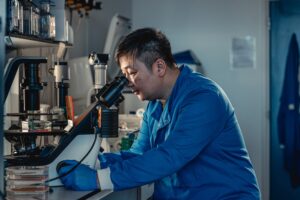
2026 Research Grant Call launched
Children with Cancer UK launches the 2026 Research Grant Call to accelerate breakthroughs in childhood cancer
Read more 2026 Research Grant Call launched
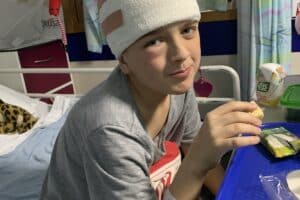
Emil’s Brain Tumour Story
Emil’s Brain Tumour Story Hear Emil tell his story of his brain tumour diagnosis when he was 9 and how…
Read more Emil’s Brain Tumour Story
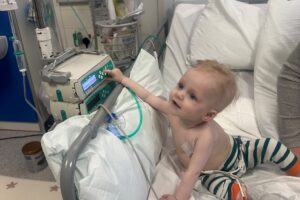
Ren’s Neuroblastoma Story
Ren’s Neuroblastoma Story Ren was diagnosed with Neuroblastoma at just eight months old. His mum Harriot is sharing his story….
Read more Ren’s Neuroblastoma Story
Brain Tumour Awareness Month
Children with Cancer UK is raising awareness & funding new research to deliver more targeted treatment for children with brain tumours
Read more Brain Tumour Awareness Month

Fundraiser of the Month: Darragh
Fundraiser of the Month: Darragh Our Fundraiser of the Month for March 2026 goes to Darragh, who took on the…
Read more Fundraiser of the Month: Darragh
Patient Story – Daithi
Daithi’s Story: Living with Neuroblastoma Daithi was diagnosed with neuroblastoma, a rare childhood cancer. His parents, Gemma and Connor, tell his…
Read more Patient Story – Daithi

Andrew’s Leukaemia Story
Andrew’s Leukaemia Story Andrew was only a toddler when he started to get poorly and was soon after diagnosed with…
Read more Andrew’s Leukaemia Story

Sound Bites: A new food & music festival launches this spring
Sound Bites London will take place at Syon Park on Friday 8th & Saturday 9th May 2026 in support of Children with Cancer UK. At least £10 from every ticket sold will be donated directly to the charity.
Read more Sound Bites: A new food & music festival launches this springStay in touch
Stay up to date with all our research news, exclusive stories, fundraising events and opportunities to support us.
"*" indicates required fields